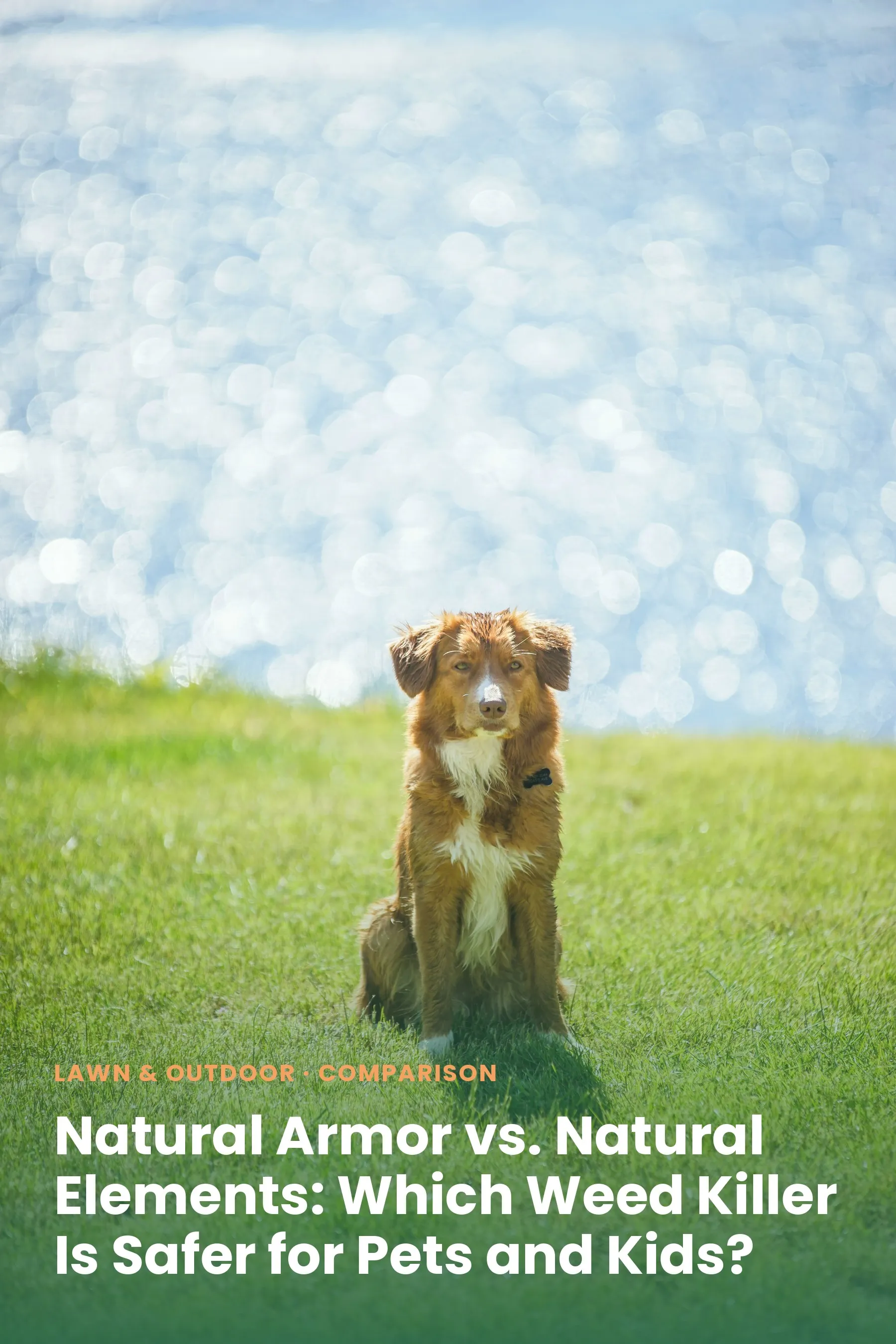
Both of these weed killers skip glyphosate in favor of a vinegar-and-salt formula, and both are marketed as pet-safe. That’s where the similarities end. Natural Armor ships with a sprayer and claims results in under an hour. Natural Elements carries the higher rating and leads with a “safe around children” claim right on the label. If kids or pets use your lawn daily, this comparison breaks down where each product actually helps.
If you’re also clearing your yard for fall, our guide to cordless leaf vacuums for small lawns covers the other end of yard cleanup.
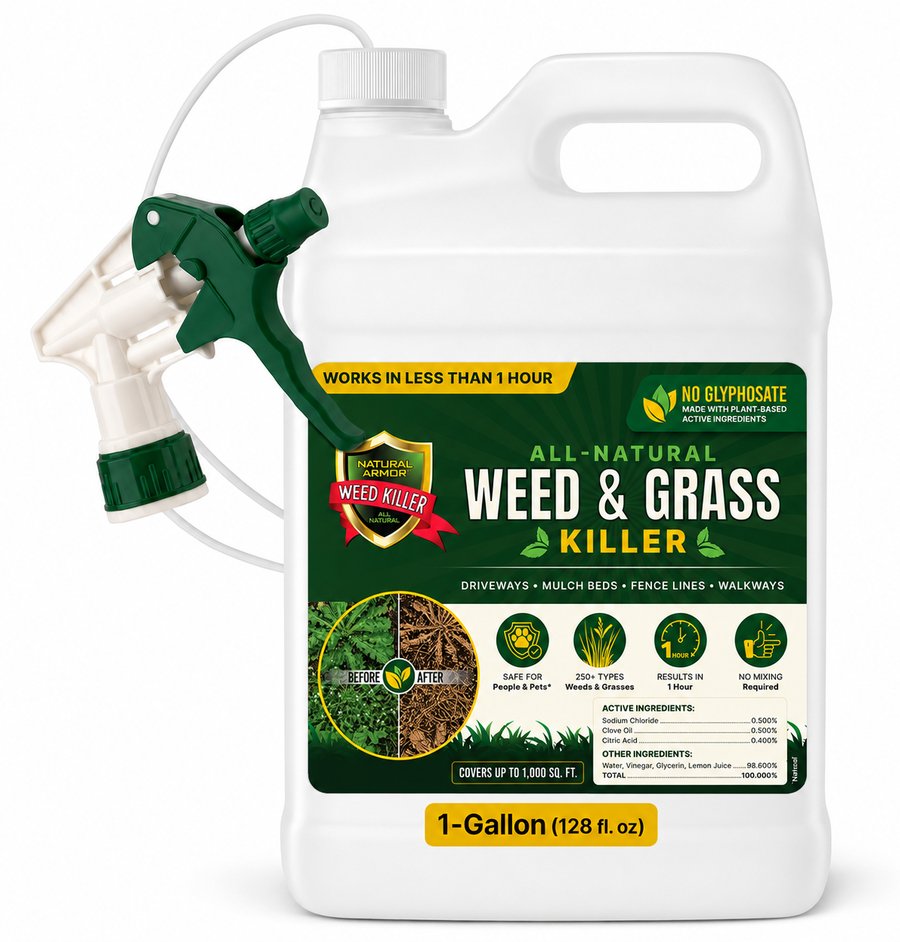
Natural Armor Weed & Grass Killer
Best for: Best for driveways, gravel, and fence lines, ships with a sprayer
Check price on Amazon →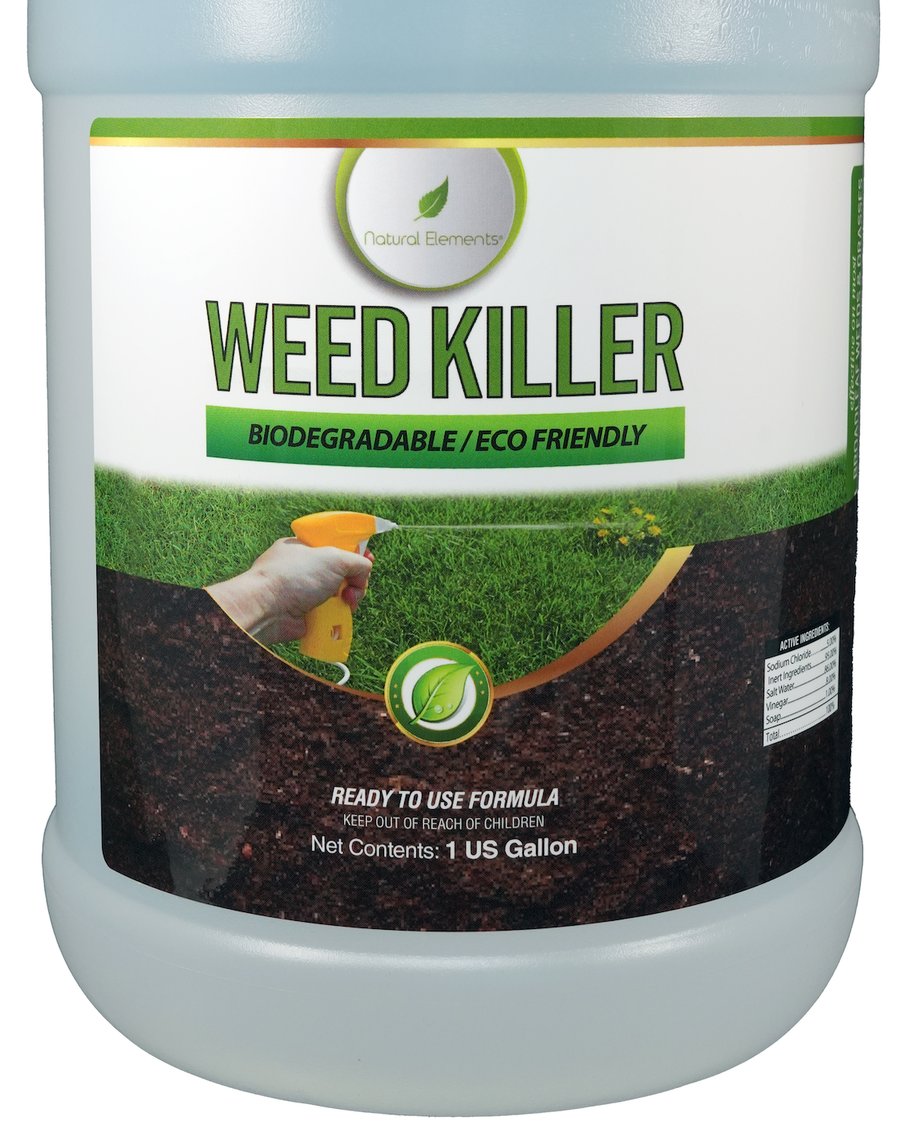
Natural Elements Weed Killer
Best for: Best overall: higher rated and built around the safety claim
Check price on Amazon →| Rating | 4.0 stars (6,526 ratings) | 4.3 stars (2,431 ratings) |
|---|---|---|
| Price | $29.95 (1 gallon, $0.23/oz) | $27.99 (1 gallon, $0.22/oz) |
| Sprayer included | Yes, trigger sprayer attached | No, bring your own sprayer |
| Claimed speed | Visible results in under 1 hour | No specific claim; reviewers report hours to a day |
| Active ingredients | Sodium chloride, clove oil, citric acid, vinegar | Sodium chloride, salt water, vinegar, soap |
| Best for | Driveways, gravel, fence lines, spot treatment | Flowerbeds, walkways, mulch beds |
| Overall verdict | Natural Elements wins | |
Safety: Is Either of These Truly Safe for Pets and Kids?
Both products are EPA FIFRA 25(b) exempt, meaning they qualify as minimum-risk pesticides made from ingredients the EPA doesn’t require to be registered, and neither contains glyphosate. That’s a different safety category than a lawn chemical like Roundup or a 2,4-D broadleaf killer, which carry real reentry-interval warnings.
The “pet safe” claim on both bottles deserves a closer look. The active ingredient doing most of the work in both formulas is sodium chloride, plain salt. Vinegar breaks down and evaporates within a day or so, but salt doesn’t. It stays on the treated grass, gravel, or soil until rain or watering washes it away, and salt toxicosis is a documented risk for dogs, cats, and especially birds that graze on or lick treated vegetation. Walking across a dry treated patch is one thing; a dog chewing on a sprayed weed or drinking pooled runoff is a different exposure, and neither label mentions it.
Both safety sheets also say to keep the product out of reach of children and pets, which is standard for any yard spray regardless of the “natural” branding. Keep kids and pets off a freshly sprayed area until it’s dry (a few hours in direct sun), rinse a pet’s paws if they walk through wet spray, and don’t let anyone eat what’s been treated. Neither product is safer than the other here. They’re a real step down from synthetic herbicides, but treat them with the same basic caution you’d use for any yard chemical.
Effectiveness: Which One Actually Kills Weeds Faster?
Natural Armor’s label promises visible results in under an hour, and most reviewers back that up for young, soft-leaved weeds: they brown within a few hours and look dead by the next day. Tougher, more established weeds take longer. Several reviewers needed a second application, and a few reported barely any change after a full bottle.
Natural Elements doesn’t make a specific speed claim, but the pattern in reviews is similar. Light, newer weeds wilt within a day. One reviewer praised it as safe around kids and dogs but noted tougher patches needed a repeat spray. Another found that weeds with deep root systems, like thistle and nutsedge, grew back within two to three weeks.
That regrowth pattern comes down to how both products work. Vinegar and salt are contact killers: they burn the leaf tissue they touch but don’t travel down into the root system the way a systemic herbicide does. That’s fine for weeds sprouting in mulch or between pavers. For an established dandelion or a perennial with a deep taproot, expect to spray more than once, and don’t expect either product to prevent regrowth long-term. Both are also non-selective, so they’ll brown your grass as fast as the weeds if you overspray near the edge of the lawn.
Ease of Use: Sprayer, Smell, and Application
The Natural Armor gallon reviewed here comes with a trigger sprayer already attached, so it’s ready to use straight out of the box. Reviews flag inconsistency in sprayer quality between batches: some customers got a nozzle with a strong, focused stream, while others received one that leaks around the base or won’t release a consistent mist. If yours arrives with a bad sprayer, decant into your own pump sprayer and the problem goes away.
Natural Elements’ 1-gallon bottle doesn’t ship with a sprayer. Plan on pouring it into a spray bottle or a pump sprayer you already own, which adds a small extra step and cost if you don’t have one on hand.
Both products have a strong vinegar smell during and right after spraying. It fades within a day but is noticeable up close, so treating a larger area is more pleasant with the wind at your back.
Buy the Natural Armor Weed & Grass Killer if…
- You want a sprayer included so you can start spraying right away
- You're treating a driveway, gravel path, or fence line rather than the lawn itself
- You want the fastest claimed results for young weeds
Buy the Natural Elements Weed Killer if…
- You want the higher-rated option with fewer complaints
- You already own a spray bottle or pump sprayer
- You're mainly treating flowerbeds, walkways, or mulch beds around a small lawn
Frequently Asked Questions
Are Natural Armor and Natural Elements actually safe for pets and kids?
Both skip glyphosate and qualify as EPA minimum-risk pesticides, which is safer than a synthetic lawn herbicide. But both rely on sodium chloride (salt) as a key ingredient, and salt residue can linger after the vinegar smell fades. Keep pets and kids off treated areas until they're dry, and don't let pets graze on or lick sprayed vegetation.
Will either of these kill my lawn grass?
Yes. Both are non-selective, so they'll brown grass just as fast as weeds. Use them on driveways, gravel, mulch beds, and walkways, and keep the nozzle pointed away from any turf you want to keep.
How long until it's safe for pets and kids to walk on the treated area?
Plan on a few hours in direct sun for the spray to dry. Neither label gives an exact reentry time, so keep the area off-limits until it's visibly dry.
Do I need to dilute either product?
No. Both come ready to use straight from the bottle, no mixing or diluting required.
Will one application get rid of weeds for good?
Not for anything with an established root system. Both products are contact killers that burn the leaf tissue they touch rather than killing the roots, so deep-rooted perennial weeds like dandelions or thistle often need a second application and can return within a few weeks.