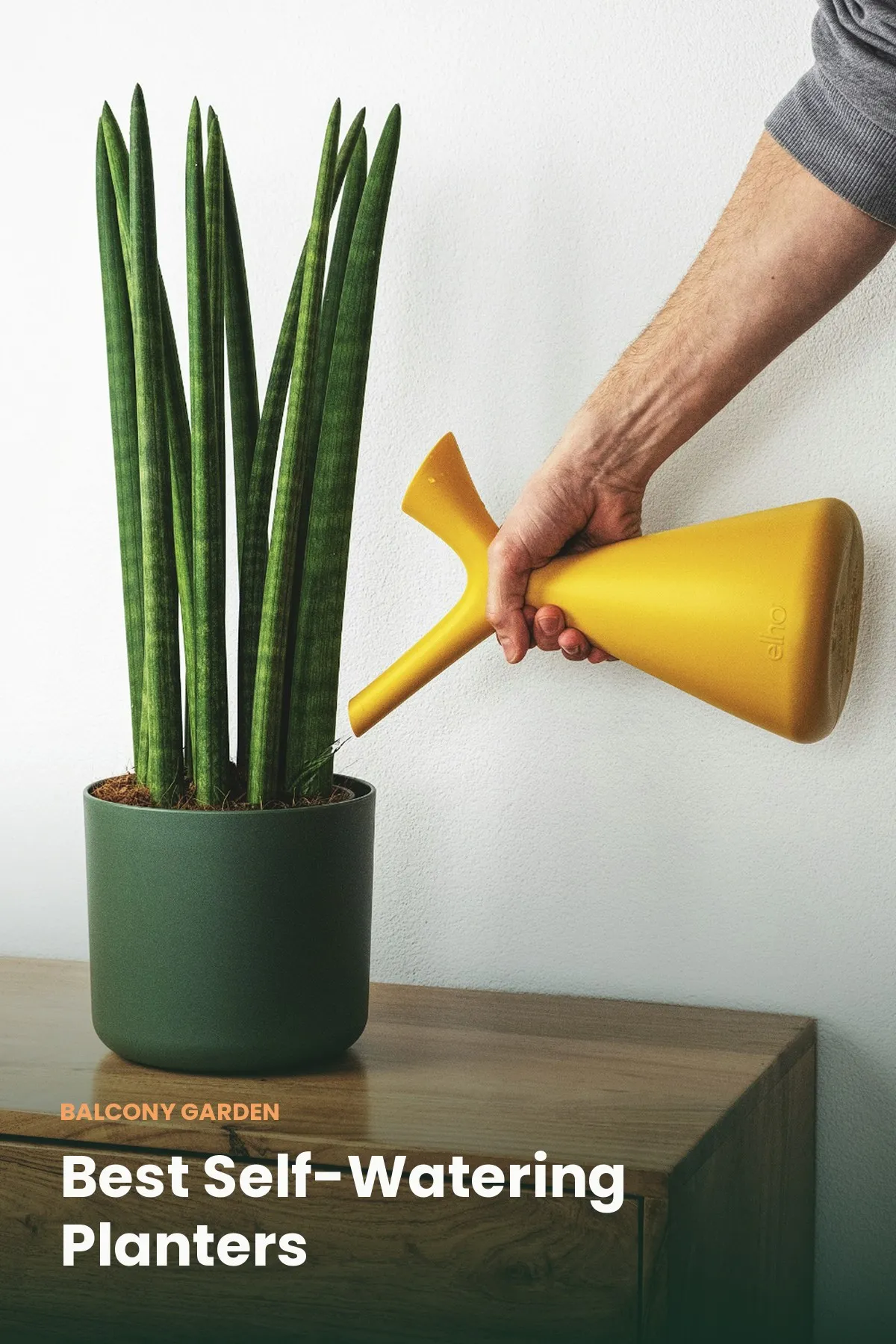
Balcony plants shouldn’t need watering twice a day in July. Self-watering planters store water in a reservoir and wick it up as the soil dries, so plants drink on their own schedule. These four cover the real range: a premium reservoir pot, a cheap two-pack, a six-pot set for a whole windowsill, and a hanging option for rail space.
Curious how our top pick stacks up against a budget alternative? See our head-to-head comparison. And once a plant outgrows its pot, here’s how to repot it properly.
| # | Product | Best for | Rating | Price |
|---|---|---|---|---|
| 1 | Lechuza Cubico ↗ | Overall | $111.75 | |
| 2 | Fielda 2-Pack 8" Self-Watering Pots ↗ | Budget | $19.99 | |
| 3 | T4U 6-Pack Self-Watering Pots ↗ | Multiple Plants | $23.99 | |
| 4 | Bouqlife 3-Set Hanging Planters ↗ | Hanging & Balcony | $23.95 |
#1 Best Overall: Lechuza Cubico
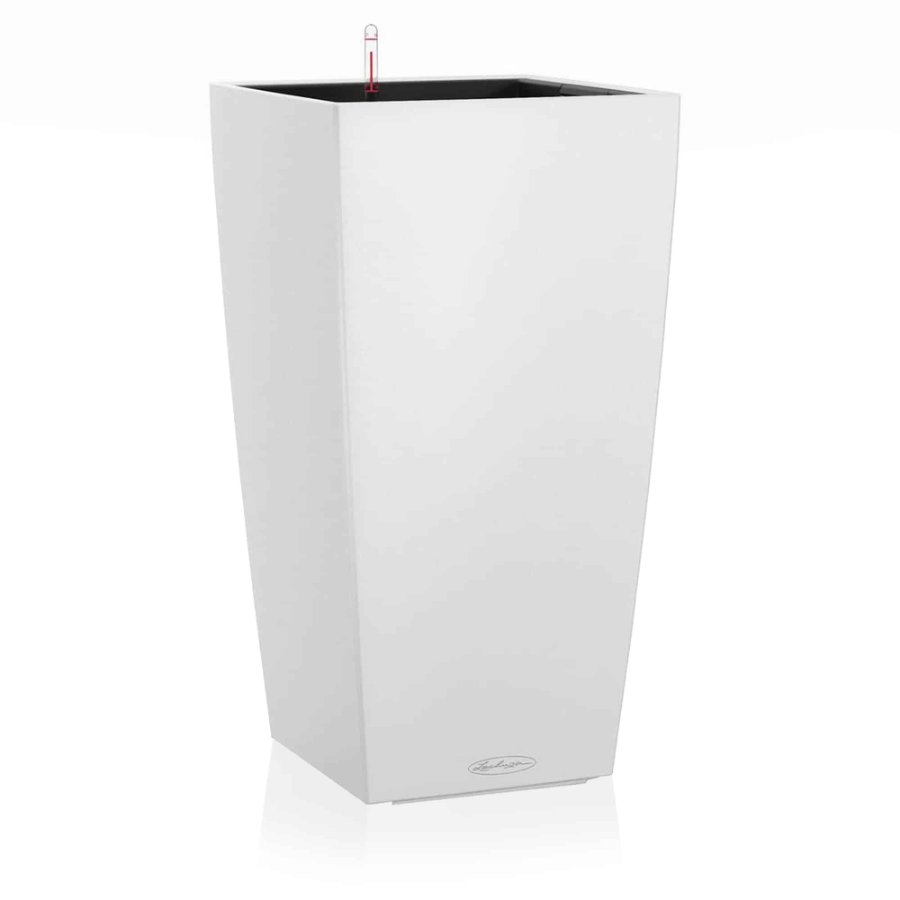
Lechuza Cubico Self-Watering Planter
Price may vary. Check Amazon for current price. Check price on Amazon →The Cubico pairs a generous reservoir with a water-level indicator, so you always know when to top it up. On a hot balcony it comfortably goes a week or more between fills. You water the reservoir instead of the soil, which encourages deeper roots and cuts down on dry spells.
Pros
- Large reservoir lasts one to two weeks
- Clear water-level gauge
- UV-stable, fade-resistant resin
Cons
- Pricier than basic pots
- Heavy once the reservoir is full
#2 Best Budget: Fielda 2-Pack 8” Self-Watering Pots
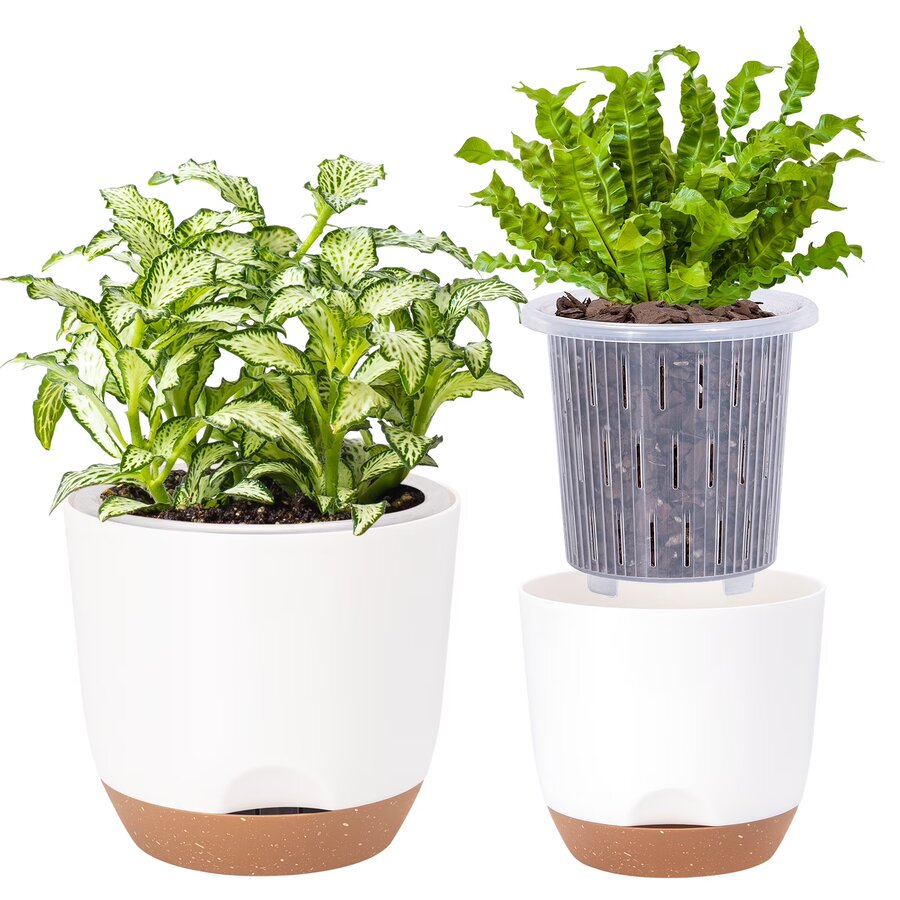
Fielda 2-Pack 8-Inch Self-Watering Planters
Price may vary. Check Amazon for current price. Check price on Amazon →Two 8-inch pots with a deep reservoir and a visible water-level window for about $10 each. No gauge as precise as the Cubico’s, but the reservoir does the same basic job at a fraction of the price, and getting two pots instead of one stretches the budget further.
Pros
- Two pots for under $20
- Visible water level through the base
- Amazon's Choice with nearly 2,000 ratings
Cons
- Smaller reservoir than premium pots
- Plastic construction feels lighter-duty
#3 Best for Multiple Plants: T4U 6-Pack Self-Watering Pots
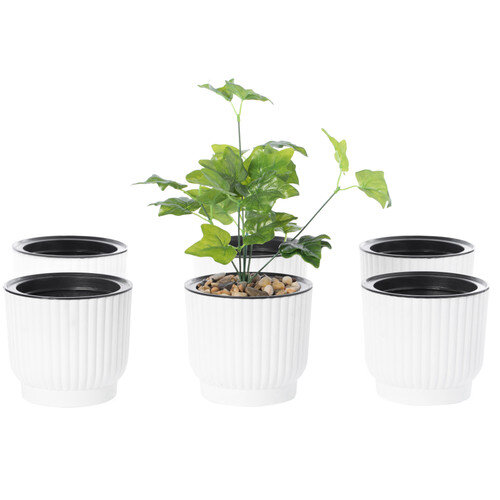
T4U 6-Inch Self-Watering Pots, 6-Pack
Price may vary. Check Amazon for current price. Check price on Amazon →Six 6-inch pots with a bottom-feed reservoir, built for a windowsill full of herbs, African violets, or small pothos cuttings rather than one big statement plant. At $4 a pot, it’s the cheapest way to convert a whole shelf to self-watering at once.
Pros
- Six pots for under $24
- Bottom-feed reservoir suits small root systems
- Consistent modern ribbed design
Cons
- Each reservoir is small, so refill more often than a single large pot
- Better for small plants than anything with a large root ball
#4 Best for Hanging and Balcony Rails: Bouqlife 3-Set Hanging Planters
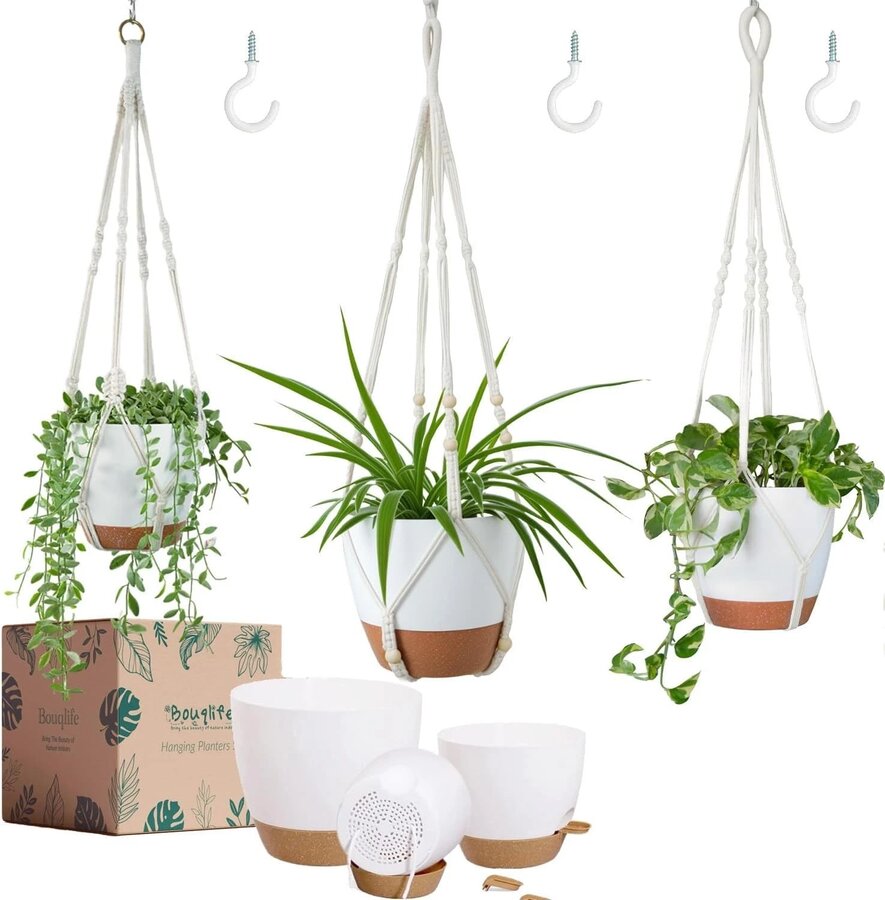
Bouqlife 3-Set Self-Watering Hanging Planters
Price may vary. Check Amazon for current price. Check price on Amazon →Three pots (7, 6, and 5.5 inches) each come with their own macrame hanger and hook, built for a balcony rail or ceiling hook rather than a floor or ledge. Each pot has its own reservoir, so you’re not stuck watering all three on the same schedule.
Pros
- Three sizes cover small to medium plants
- Macrame hangers and hooks included
- Each pot has an independent reservoir
Cons
- Takes up vertical space, not floor space
- Macrame cord will fade faster outdoors than the pots themselves
What to Look for in a Self-Watering Planter
Reservoir size
Bigger reservoirs mean longer gaps between watering, which matters most on an exposed balcony.
Water-level indicator
A visible gauge takes the guesswork out of refills and helps you avoid overwatering.
Material and UV resistance
Balcony planters sit in direct sun for most of the day. Look for UV-stable resin that won’t fade or crack within a season.
Fill the reservoir, then check soil moisture after 7 days before topping up. Most planters outlast your instinct to water.
Frequently Asked Questions
How often do self-watering planters need refilling?
Most go five to fourteen days between refills, depending on reservoir size, plant, and heat.
Can any plant grow in a self-watering planter?
Most houseplants do well, but plants that prefer dry soil between waterings, like succulents and cacti, can be prone to overwatering in one.