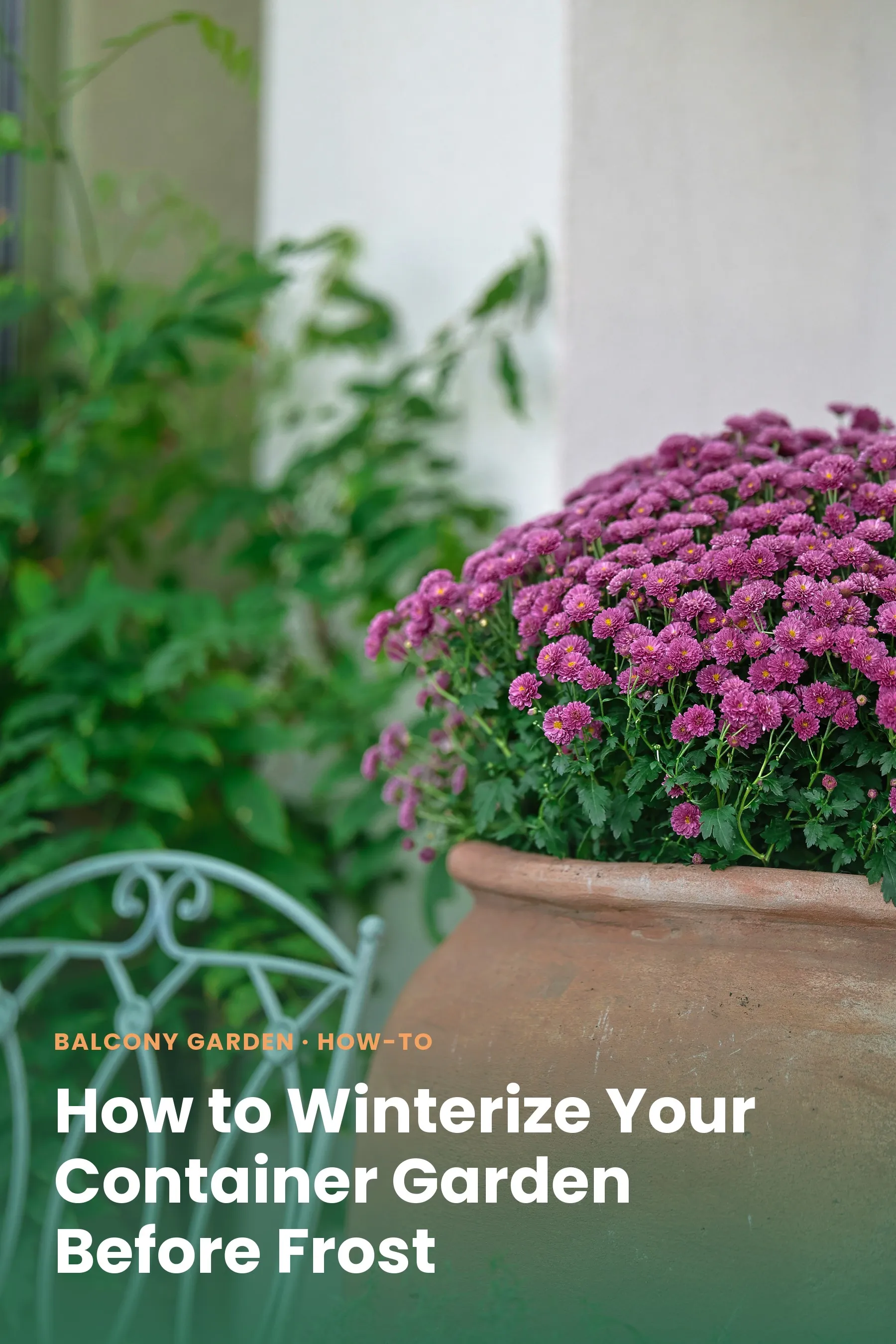
Container plants are far more exposed to cold than anything growing in the ground, since a pot has no surrounding earth to buffer root temperature. A hard freeze can kill a potted perennial that would have survived the same night in a garden bed. This takes about 45 minutes for a typical patio or balcony setup, costs around $40 in supplies, and is beginner-friendly.
If you planted self-watering planters or a vertical garden wall this year, the same containers need this same prep before the first hard frost.
What you'll need
Know your first frost date and check overnight lows
Look up your local first frost date and start watching the forecast about two weeks before it. A soil thermometer is the more reliable signal than air temperature alone. Push it a few inches into the container and check it in the evening. Most tender plants start showing cold stress once soil temperature drops toward 50°F, well before the air itself feels freezing.
Bring tender and tropical plants indoors first
Anything not rated for your winter zone, including tropicals, herbs, and most houseplants that spent the summer outside, should come inside before the first frost, not after. Move them gradually if possible: a few hours indoors each day for a week helps them adjust to lower indoor light before they live there full-time.
Inspect leaves and the soil surface for pests before bringing any pot inside. A quick rinse under the hose and a few days of quarantine away from other houseplants prevents an outdoor pest problem from becoming an indoor one.
Group and elevate the pots staying outside
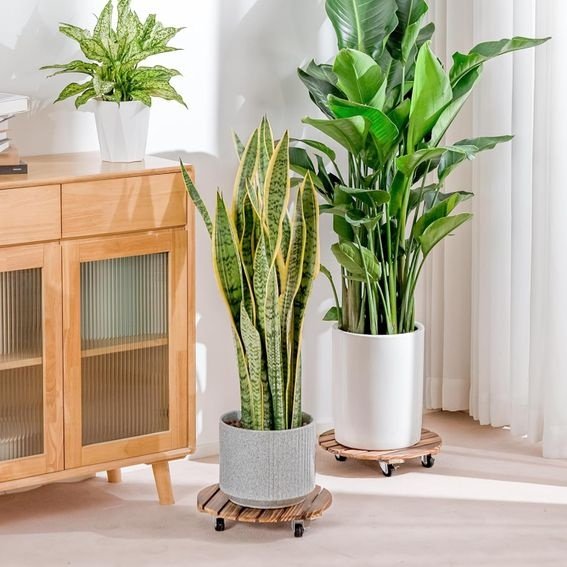
Cold-hardy plants that can stay outdoors all winter, including many perennials, shrubs, and small trees in containers, do better clustered together against a house wall, which blocks wind and holds a little residual heat. Set each pot on plant feet or risers first. Raising the pot off the ground stops it from sitting in trapped meltwater, which is what cracks terra cotta and glazed ceramic during freeze-thaw cycles, not the cold itself.
Cover exposed pots before hard freeze nights
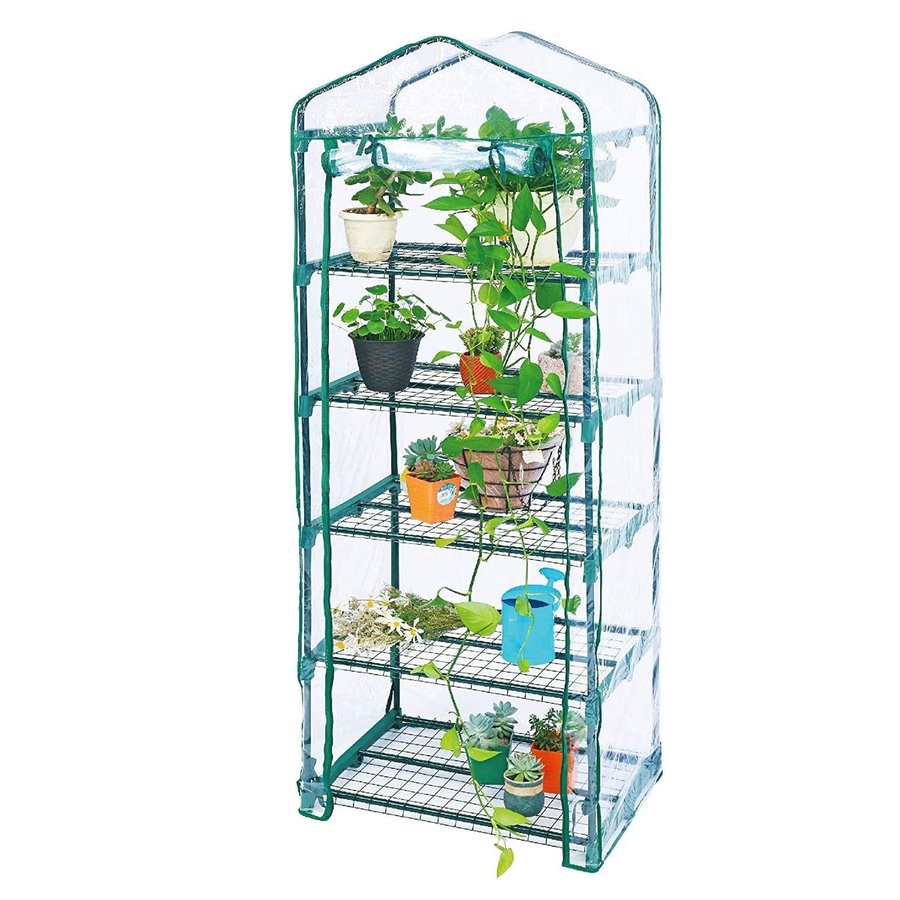
On nights forecast well below freezing, zip a frost cover over each outdoor container, cinching the drawstring at the base so cold air can’t sneak in underneath. Pull the covers off again once temperatures climb back above freezing during the day. Leaving them on around the clock traps moisture and blocks the light the plant still needs.
Cut back, stop fertilizing, and mulch the soil surface
Trim back dead or dying foliage on perennials so the plant isn’t wasting energy supporting growth it will drop anyway. Stop fertilizing entirely, since feeding a plant that’s heading into dormancy pushes tender new growth that cold will simply kill. A one- to two-inch layer of mulch or dry leaves on top of the soil adds a further layer of insulation around the root zone.
Tips and Common Mistakes to Avoid
- Don’t stop watering entirely once it’s cold. Dormant containers still dry out, especially on windy days, and a completely dry root ball is more frost-vulnerable than a moist one.
- Skip the fertilizer until spring growth resumes. Feeding in fall pushes new growth right when the plant needs to slow down for winter.
- Terra cotta and glazed ceramic pots are the most freeze-crack-prone. If you have room, move empty or fragile pots into a garage or shed for winter rather than leaving them exposed.
- Don’t wrap evergreens in plastic, since it traps condensation and can do more damage than the cold itself. Breathable fabric covers are the safer choice.
Take It Further: Recommended Products
Frequently Asked Questions
At what temperature should I bring container plants inside?
Bring tender and tropical plants in before nighttime temperatures drop into the mid-40s°F. Most cold damage happens well before the air hits the freezing point, since containers offer little insulation for the roots.
Can I leave any potted plants outside all winter?
Yes. Cold-hardy perennials, shrubs, and small trees in containers can usually stay out if they're grouped against a wall, raised off the ground on pot feet, and covered on the coldest nights.
Do dormant container plants still need water in winter?
Yes, just much less. Check the soil every couple of weeks and water lightly if it's dry an inch down. A completely dried-out root ball is more vulnerable to freeze damage than moist soil.